The Science of Human Potential
For many years, psychologists believed that human development ended when someone reached adulthood. However, researchers have since discovered that people continue to grow and develop throughout their entire lives. Thanks to researchers like Abraham Maslow and Susanne Cook-Greuter, we now know that human beings can acquire incredible levels of awareness, wisdom, and maturity... if they have access to the right resources.
Over the past decade, I have studied this research and translated it into practical tools for personal growth. My work focuses on identifying the resources, methods, and practices that support psychological development, and making them accessible to anyone who wants to achieve their full potential. My mission is simple: to help people better understand their potential and provide them with the tools to become their best selves.
Part 1: What is Self-Actualization?
“It looks as if there were a single ultimate goal for the human species, a far goal toward which all persons strive. This is called self-actualization, self-realization, integration, psychological health, individuation, autonomy, creativity, productivity, but researchers agree that this amounts to realizing the potentialities of the person - that is to say, becoming fully human, everything that person can be.”
― Abraham Maslow
For much of its history, psychology focused on studying mental illness and trauma. While this work produced valuable insights, it also had a significant blind spot - relatively little effort was spent to understand what human potential looked like.
Abraham Maslow’s work on self-actualization was one of the first systematic attempts in psychology to explore human potential. Rather than researching mental illness, Maslow studied individuals who appeared exceptionally healthy, creative, wise, and psychologically mature. Through his research, Maslow identified a pattern of growth that he called self-actualization. He found that highly-developed individuals tended to possess certain qualities and certain values, which he believed to be central to the human experience.
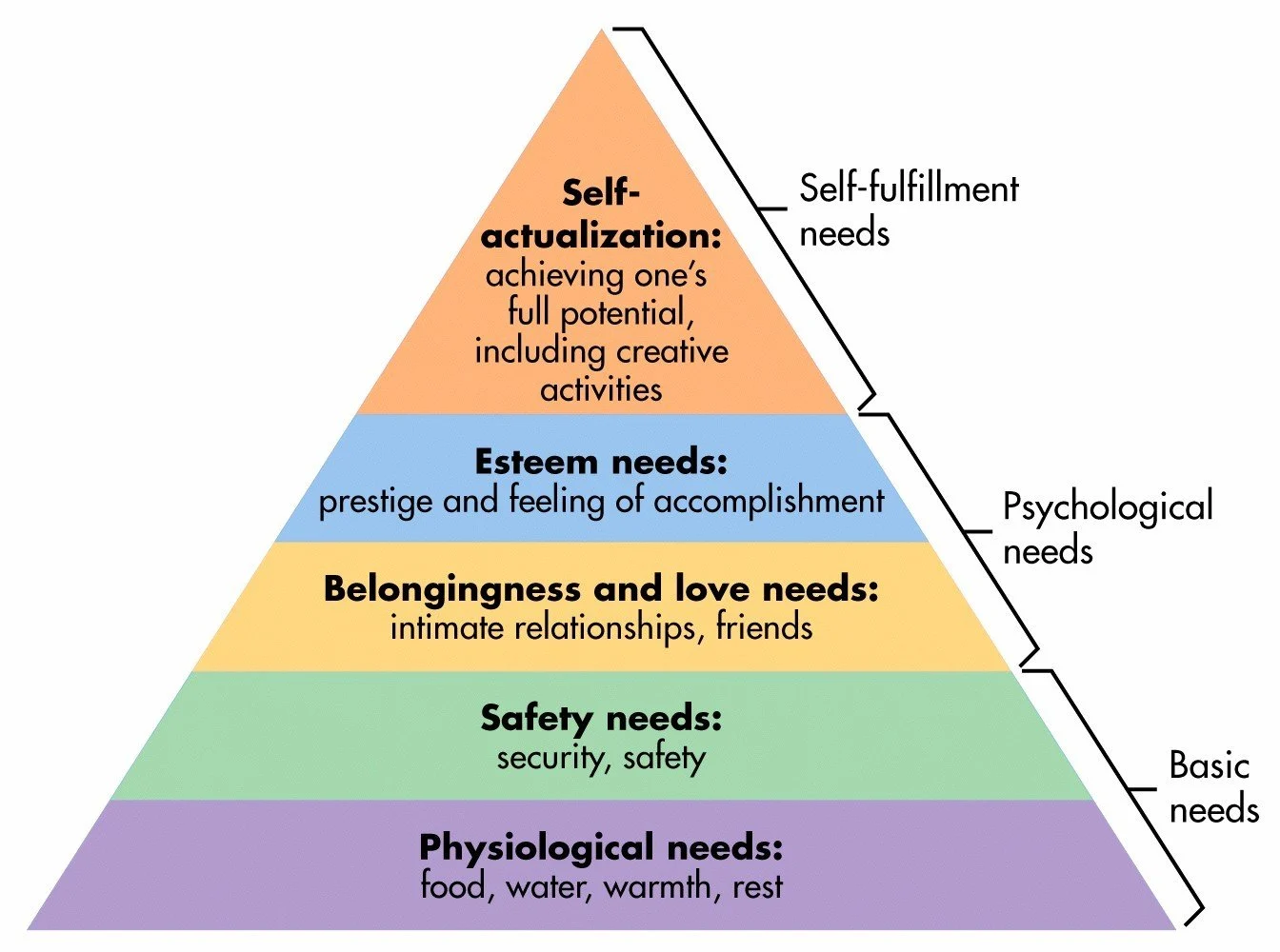
Most psychologists have never read Maslow's work, and universities often reduce Maslow's discoveries to his Hierarchy of Needs. But Maslow himself saw self-actualization as a developmental process: a pattern of growth that builds capacities like maturity, perception, creativity, and wisdom.
Since Maslow's early work on self-actualization, developmental psychologists have discovered something similar. Through extensive analysis, they found that human consciousness does not merely change in content over time; it evolves in structure. The later stages of psychological growth, called postformal development, closely mirror what Maslow discovered in his work with high-performing individuals. This means that if we are to help people reach their full potential, helping them achieve advanced psychological growth is an important part of that.
Part 2: What is Postformal Development?

Pre-Formal Development
5% of Adult Population
Pre-formal development is characterized by intuitive, concrete, and emotionally driven thinking, with limited capacity for abstraction or systematic reasoning. Individuals at this stage tend to interpret reality through personal experience, authority figures, and immediate social norms. Beliefs are often held rigidly and are strongly shaped by family, culture, and group identity.

Formal Development
77% of Adult Population
Formal development involves the emergence of abstract and logical reasoning. Individuals can think hypothetically, analyze arguments, and apply logic to their thinking. Many professionals consider this to be the peak of human development, and it is the focus of mainstream education.

Postformal Development
18% of Adult Population
Post-formal development is marked by integrative and reflective thinking that can hold multiple perspectives simultaneously. People at this stage of development are able to reflect more deeply about themselves, foster stronger relationships, and lead change in complex environments. Their perspective of the world is more nuanced, and their sense of self extends beyond their cultural conditioning.
“People’s stage of development influences what they notice and can become aware of, and therefore, what they can describe, articulate, cultivate, influence, and change... A person’s understanding of power, feedback, time, love, integrity and truth, for instance, changes with increasing development.” - Susanne R. Cook-Greuter
The Advantages of Postformal Development
Research has shown that people at postformal stages of development possess advanced mental, emotional, and relational capacities. They perceive the world in more nuanced ways, and have a deeper understanding of themselves. They are more effective leaders, better parents, better partners, and better friends.
Because of this increased psychological capacity, people at postformal stages of development are able to achieve more in every other aspect of their lives. Their increased self-understanding offers psychological integration, and their heightened perception gives them the ability to have transformative impact.
The literature on higher stages of development and Maslow's work on self-actualization are eerily similar. Both bodies of research describe similar capacities, traits, and values. Both bodies of work are focused on how people can become fully human. And, both bodies of work are concerned that most of the adult population has not reached this level of development.

Part 3: The Science of Transformation
Researchers have identified three necessary elements that catalyze postformal growth. First, there needs to be a disorienting dilemma, where someone's current perspective is proving to be insufficient to solve a problem in their life. Many people experience challenges like this, whether in their workplace, their relationships, or in response to social problems.
Once someone has a disorienting dilemma to solve, they require access to new perspectives, where that person gains information that allows them to see their problem differently. This is very different than simply gaining new skills - solving a disorienting dilemma requires someone to transform how they see the problem... and often how they see themselves.
Finally, transformative growth requires a process of elevated sensemaking, where a guide, mentor, coach, or therapist supports the development of a more complex perspective. Many therapists and coaches support postformal development indirectly, usually by facilitating a process of elevated sensemaking. However, most professionals seem to be unaware of the developmental milestones that are required for postformal development, and do not structure their practice around supporting this kind of growth.
Challenge #1: Access to New Perspectives
Human beings naturally interpret experiences through their existing beliefs, assumptions, and habits of thought. Without exposure to perspectives at a higher level of development, it is very difficult for people to transcend their own worldview and experience transformative growth. Thankfully, modern technology allows us to print and distribute resources at scale, which gives people the opportunity to be exposed to new ideas and ways of thinking.
Challenge #2: Elevated Sensemaking
Without structured reflection, it is easy to reject new perspectives, misinterpret them, or fail to integrate them into a more mature worldview. Currently, therapy and coaching are the only ways that people can gain support with their sensemaking process... and they are prohibitively expensive for most of the population. Many people simply lack the access to resources they deserve.
This is where guided journaling becomes particularly valuable. Research on journaling, reflective practice, and metacognition suggests that structured reflection can help people examine their assumptions, explore alternative perspectives, and develop a deeper understanding of their problems. And most importantly, guided journals are affordable enough that anyone can gain access to them.

Guided Journals for Postformal Consciousness
The research on postformal development shows that there are specific cognitive, emotional, and relational milestones that must be reached along the journey to postformal consciousness. After mapping out these milestones, I realized that there was a cost-effective way to help people meet them - through guided journaling.
Drawing on my coaching experience and my research in psychology, I developed a series of guided journals to build important skills while catalyzing postformal development. These journals are designed to take people on specific mental journeys, which mimic therapy and coaching at a fraction of the cost.
Rather than offering advice or affirmation, my guided journals provide structured opportunities for reflection and integration. They are designed to be catalysts for transformation, not just feel-good writing exercises.
Journal Name |
Growth Outcomes |
| Thinking With Integrity | Critical Thinking, Virtue, Empathy, Emotional Awareness, Growth Mindset |
| Wise Mind | Understanding Wisdom, Methods of Acquiring Wisdom, Virtue, Paradoxes, Folk Wisdom |
| Active Intellect | Growth Mindset, Reflective Practice, Action Inquiry |
| Go To Yourself | Self-Discovery, Purpose, Goal-Setting |
| Peacemaker | Conflict Resolution Skills, Empathy |
| All The Feels | Emotional Awareness, Emotional Regulation |
Further Reading
- The Farther Reaches of Human Nature (Abraham Maslow)
- 9 Levels of Increasing Ego Embrace (Susanne R. Cook-Greuter)
- Transformative Dimensions of Adult Learning (Jack Mezirow)
- Action Inquiry: The Secret of Timely and Transformative Leadership (Bill Torbert & Associates)
- The How-To of Vertical Leadership Development (Nick Petrie)
- The Benefits of Writing (Jordan B. Peterson, Raymond Mar)